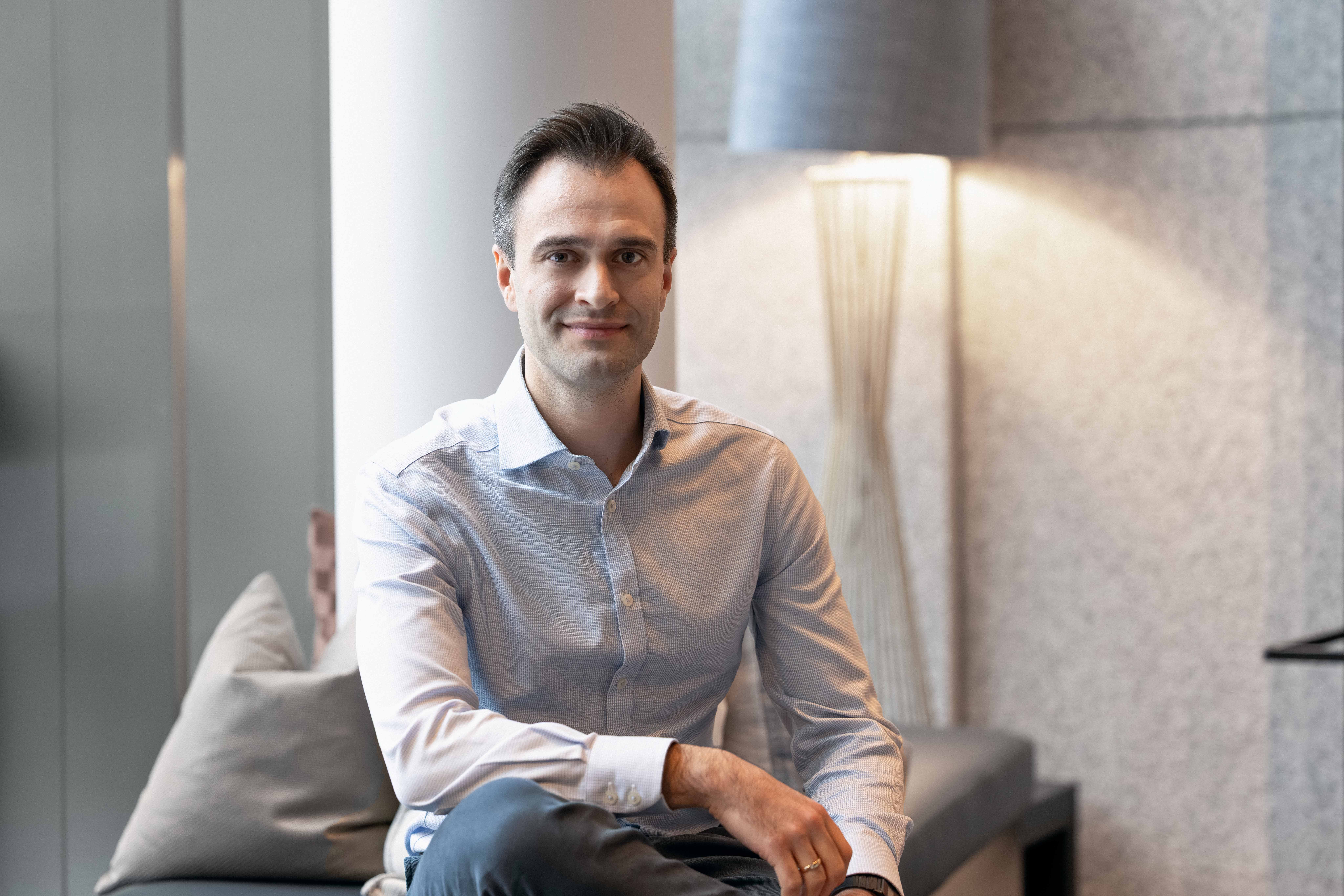
In this interview, Visma's Chief Growth Officer Ari-Pekka Salovaara explains how Visma keeps its entrepreneurial spirit alive - and what founders should focus on to scale sustainably in an evolving SMB landscape.
INSIGHTS: An interview with Ari-Pekka Salovaara, Chief Growth Officer at Visma
Growth is built into Visma’s DNA, but what does it take to sustain that across over 180 companies and 28 markets? We sat down with Ari-Pekka Salovaara, Visma’s Chief Growth Officer, to discuss what drives sustainable growth in a decentralised organisation, how experimentation fuels innovation, and the lessons he’s learned from scaling businesses inside and outside Visma.
Role & Vision at Visma
1. Can you explain your role as Chief Growth Officer at Visma?
As Chief Growth Officer, I co-lead Visma’s Business Segment together with Steffen Torp, our Chief Commercial Officer. This segment covers our offering for SMBs, mainly focusing on core solutions like accounting, payroll, invoicing and tax, but also catering to businesses with more advanced needs, like logistics, expense management and HRM. The Business segment represents more than 70% of Visma’s total revenue.
My career started as an entrepreneur, and before this role I led the Small Business segment within Visma. That experience shaped my focus: helping companies scale efficiently while keeping the entrepreneurial energy that defines Visma.
2. Visma has grown significantly over the past nearly three decades. How do you ensure that growth remains sustainable and aligned with Visma’s values as the company scales further?
It comes down to a balance between the autonomy of local expertise and Visma Group-wide support. While our local companies have the freedom to act entrepreneurially and tailor their products to the specific needs of their markets, they are also backed by the collective strength of the Visma Group.
We rely on our local experts to understand their customers, markets, and regulatory environments - because what works in Norway may not work in Germany or Brazil. That deep local insight drives innovation and relevance. At the same time, our Group structure enhances this entrepreneurial autonomy by enabling knowledge sharing across companies, providing access to shared technology and data, and guiding focus through our accumulated experience and best practices.
This combination of entrepreneurial independence and shared experience under our decentralised structure ensures that our growth is both adaptable and consistent with our values.
In essence, our growth model ensures our businesses keep growing through Knowledge-sharing, Entrepreneurship, and Focus.
Knowledge-sharing
3. Visma is known for combining the agility of startups with the structure of a large organisation. How do you foster knowledge sharing to maintain this balance as the company continues to grow?
Knowledge-sharing. It’s one of our greatest strengths.
Alongside maintaining speed by giving our companies freedom to operate independently - while offering a strong support system when they need it - knowledge sharing ensures we do this in the most efficient way.
We create environments that encourage experimentation, where teams can try new things, get quick feedback, and replicate what works.
It’s a powerful model: the freedom to experiment locally, and learn expansively from the experiences of a 180+ company network.
4. Is that why Visma has the SMB Olympics?
Yes!
The SMB Olympics is a biannual competition that we hold internally at Visma, where our companies present product demos - everything from payroll to invoicing - to an independent jury.
The goal isn’t just to win a title of ‘best’, but to learn. Everyone gets to see what others are building, compare approaches, and adopt best practices.
This kind of knowledge sharing is playful, but impactful in driving our continuous improvement - one Swedish team made over 40 product enhancements in a year after taking part. Importantly, it keeps our startup way of thinking alive - even at scale.
5. At Visma, successful “growth” can come in various forms - new markets, networks, products, or partnerships. What conditions are critical to driving this success?
Growth at Visma is about creating the right conditions for success - not just chasing numbers. For me, it means helping our companies focus on what they do best, and giving them the network of tools, data, and support to accelerate that.
We grow sustainably when our companies learn from each other. A big part of my job is making sure those learnings travel quickly across borders within the Visma ecosystem. We’ve built an environment where founders and leaders can test ideas, share results, and avoid repeating mistakes others have already solved.
When that network effect starts working, that’s when real growth happens.
Insights on Entrepreneurship
6. You’ve built and invested in many startups yourself. What lessons from entrepreneurship do you still apply every day at Visma?
A lot of it comes down to staying curious and close to the customer.
When I built my own company, my first idea failed, but the second - built with my university friends to solve our own invoicing problem – succeeded. Building a startup is about finding a real market gap, experimenting constantly, and adapting as you grow.
That entrepreneurial mindset remains central at Visma: test, learn, and share. We work to recreate that environment and give people space to discover what customers want and grow from there.
Growth isn’t luck, it’s about creating the right conditions for success, and for our company to expand, it’s in our best interest to keep that entrepreneurial mindset alive.
7. As small businesses evolve, what trends are you seeing amongst entrepreneurs today, and how is Visma helping them adapt to succeed in this changing landscape?
Across Europe and Latin America, we’re seeing a surge in new businesses – many of them digital-first and ambitious – but simultaneously facing growing complexity. There’s more regulation, fewer accountants, and greater expectations for efficiency. That combination creates a huge opportunity for automation and cloud-based software that lets entrepreneurs focus on growing their business rather than managing compliance.
Around 80% of European small businesses outsource accounting, so understanding that ecosystem is key. Many founders underestimate how important accounting offices are as sales channels. Helping our companies navigate that – market by market – is a big part of what we do.
And of course, AI is reshaping everything. We’re already using it in customer support and product development, and we’re experimenting with ways it can empower entrepreneurs and small businesses to work more efficiently.
Reflections: Scaling through Focus
8. Many founders dream of scaling and eventually being acquired. Having been on both sides of that journey, what do you think founders often underestimate most?
That focus is just as important as ambition.
We always advise our companies to succeed in their home market before expanding – and use data-driven insights to avoid distractions.
When I built Severa, we were doubling revenue every year and growing fast - until the 2008 financial crisis hit. Growth slowed, and we had to rethink everything. We refocused on our home market, refined our product, and built a strong local team. Shortly after, Visma called.
When things go well, it’s tempting to chase every opportunity. But true growth often comes from narrowing your focus and doubling down on what works.
9. Having said that, looking back on your career as an entrepreneur, CEO, investor, and now Growth Officer, what advice would you give your younger self starting out in software and entrepreneurship?
Expect the unexpected – and focus on what you can control.
When we started Severa at 22, we were confident but inexperienced. The first idea failed. The second - an invoicing tool built to solve our own problem - became Severa, later acquired by Visma.
We thought we’d sell and move on, but we stayed because the freedom we had inside Visma was, to my surprise, greater than before. What began as a €2 million business in 2019 grew to around €160 million in revenue this year.
Surprises - and happy accidents - are what made the journey. The key is to stay focused enough to execute, but open enough to adapt when the opportunity appears.
Future Outlook
10. What are the biggest risks to Visma’s growth story – if any – and how are you working to address them?
Complacency. The greatest risk for any fast-growing company is believing you’ve figured it all out.
That’s why at Visma, we’re relentless about measuring and learning. Every month, we track customer satisfaction (NPS) and employee engagement across all our companies. These insights help us identify challenges early, share best practices quickly, and stay humble enough to keep improving.
11. As you look ahead, what developments in small business technology over the next 5–10 years excite you the most – and why?
No surprise here - AI.
We’re still early in the journey, but the impact will likely be greater than we can imagine. It’s a bit of a gold rush right now; we don’t yet know which experiments will create the biggest breakthroughs. But the pace of learning is incredible.
The beauty of Visma’s decentralised model is that when one company finds something that truly works, the entire group benefits. That’s what makes our growth sustainable - and our innovation so exciting.