Insights
Insights
Article
The product edge: How Visma turns discovery into every company's competitive advantage
Life at Visma
May 5, 2026
Article
The product edge: How Visma turns discovery into every company's competitive advantage
Life at Visma
May 5, 2026
Building great software products is hard. Building them fast, in markets that are evolving daily, while staying ahead of what AI makes possible: that is even harder. Most product teams tackle this alone: running experiments in isolation and reinventing processes their peers have already refined.

Article
The product edge: How Visma turns discovery into every company's competitive advantage
Life at Visma
5/5/2026
Article
The product edge: How Visma turns discovery into every company's competitive advantage
Life at Visma
5/5/2026
Building great software products is hard. Building them fast, in markets that are evolving daily, while staying ahead of what AI makes possible: that is even harder. Most product teams tackle this alone: running experiments in isolation and reinventing processes their peers have already refined.
Article
The product edge: How Visma turns discovery into every company's competitive advantage
Building great software products is hard. Building them fast, in markets that are evolving daily, while staying ahead of what AI makes possible: that is even harder. Most product teams tackle this alone: running experiments in isolation and reinventing processes their peers have already refined.
Life at Visma
May 5, 2026
Building great software products is hard. Building them fast, in markets that are evolving daily, while staying ahead of what AI makes possible: that is even harder. Most product teams tackle this alone: running experiments in isolation and reinventing processes their peers have already refined.
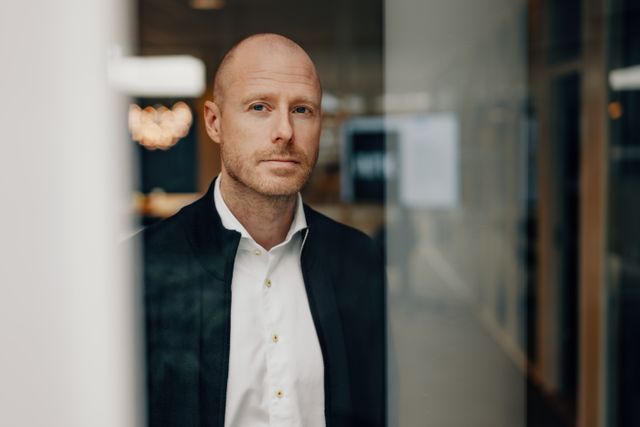
Interview with Amanda Lundius, Director of Product Discovery
Amanda Lundius has spent ten years inside Visma thinking about that problem in different roles. As Director of Product Discovery, she now leads the team responsible for helping Visma companies build best-in-class products. Not by prescribing what to build, but by strengthening product thinking and principles and by making the discovery process that works in one company available to every product manager, designer, and founder in the group.
From isolation to infrastructure
When a founder joins Visma, the most immediate shift is not the capital, the brand endorsement, or the commercial network, though all of those matter. It is the removal of a specific kind of loneliness: the feeling that you are figuring out AI-native product development on your own.
"They don't have to tackle this alone," Amanda says. "Instead, they get a clear path: from identifying opportunities and shaping solutions, to moving them into production, and optimising through real usage data and feedback."
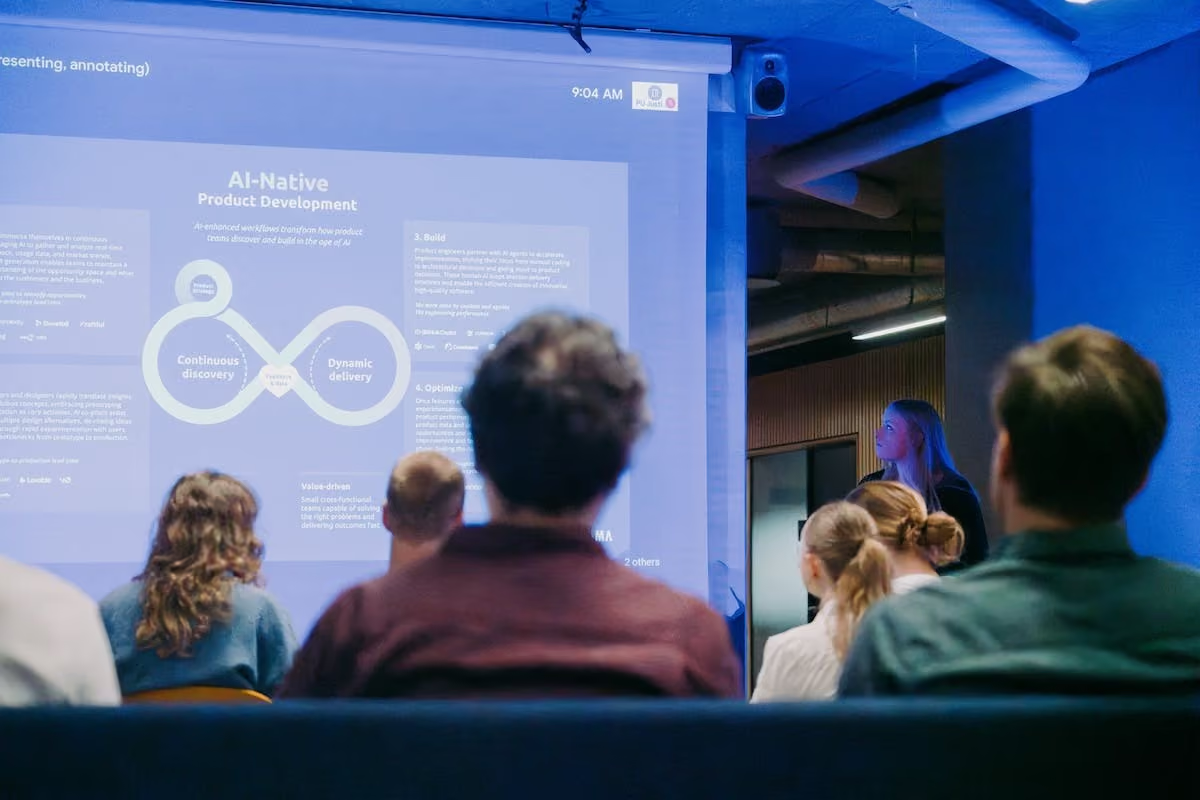
That path has a name inside Visma: the Visma Value Loop. Developed together with sister teams in AI Engineering and Product Analytics, it connects discovery and delivery into one continuous process. Alongside the framework itself, Visma shares playbooks drawn from real examples across the portfolio. Not as prescriptions, but as a starting point that can be adapted to each company's own context and customers.
"What's special about joining Visma Group is the culture: we learn from each other, share openly, and help each other succeed. The same applies to our discovery practices."
Last year, Visma's AI-Driven Discovery and Prototyping workshop upskilled 500 product and design practitioners in a single quarter. The team is currently developing an Agentic Design Sprint: a structured format that helps companies identify agentic opportunities in their products and take them all the way to validated prototypes tested with real users, in a matter of days.
A shared brain with local instincts
To keep the "shared brain" sharp, Amanda and her team run two active communities, one for Product Leadership and one for UX practitioners, where success stories from across the group are shared continuously and playbooks are co-created based on what actually works. The underlying logic is straightforward: a practice tested by a real product team in a real market carries far more weight than one developed in a sterile workshop.
In this model, what travels is process, but the process is only the vehicle. Just as vital is the transmission of "product sense": the collective understanding of how to think about a problem. Ultimately, while the shared brain provides the "how-to," what stays with each individual team is the judgment and discernment required to apply those tools effectively in their own unique market. It is the marriage of global process and local grit.
"This is only possible because we can learn from many teams, build on what works, and make that knowledge useful across the whole organisation in a way that would be much harder to do alone."
To fuel this ecosystem, they deploy at-scale engagement programs designed to align local instincts with strategic priorities:
- Product & UX Days: These sessions bring in world-class outside insights from experts like Marty Cagan, Teresa Torres, and Leah Tharin, meticulously fitting their methodologies into the specific Visma context.
- Product Leadership Accelerator: This program features masterclasses from Visma’s own top-tier leaders, paired with hands-on workshops to ensure the learnings are immediately applied to real-world challenges.
The infrastructure behind the instinct
Underpinning all of this is tooling that would be difficult for any standalone company to build, let alone maintain. The Product Analytics team provides Visma companies with a central service for user feedback and behavioural data. Compliant by design, flexible by structure, and cost-efficient at group scale.
Recently, Amanda's team released a Discovery Engine in Claude. This is a tool that guides product teams through the discovery process and surfaces opportunities and potential product improvements in minutes. It is the kind of investment that group membership makes possible: the time and resources to build something that day-to-day delivery work would otherwise crowd out.
What the first ninety days actually look like
The biggest quick win Amanda sees when companies join Visma is deceptively simple: they start measuring what matters.
"On top of that, joining the communities and connecting with peers is a huge advantage because they can see how others do discovery and adopt practices that already work."
The numbers bear it out. Penneo, a document signing and compliance platform, joined Visma and within three months had reduced their idea-to-prototype lead time by a factor of ten. The change was not just in velocity. It transformed how the company approaches both discovery and delivery as a practice.
The advice that keeps coming back
Ask Amanda for her single best piece of Secret Sauce advice for founders, and the answer is precise.
"My current advice is all about leveraging AI, and especially agents, and integrating them into team rituals. The key is to first learn the ropes of proper discovery, and then let AI do part of the heavy lifting and remove toil, while relying on human judgement, intuition, experience, and craft to make the calls."
It is a principle that cuts through most of the noise around AI adoption in product teams. The technology is not a shortcut past rigorous thinking: it is an accelerant for teams that already think rigorously. That distinction, she believes, is what will allow Visma companies to continue to win in the AI-native era.
Amanda Lundius is Director of Product Discovery at Visma. She has spent twelve years in UX and product roles, including a decade inside the Visma group.
Tags
Share
About the episode
Tags
Share

/podcast-series/voice-of-visma
Tags
Share