Article
How we turn 180 isolated experiments into one shared brain: inside Visma’s data engine room with Michael Sants
Article
How we turn 180 isolated experiments into one shared brain: inside Visma’s data engine room with Michael Sants
Business insights, Innovation and development, AI
February 20, 2026

How we turn 180 isolated experiments into one shared brain: inside Visma’s data engine room with Michael Sants
Business insights, Innovation and development, AI
February 20, 2026
Article
How we turn 180 isolated experiments into one shared brain: inside Visma’s data engine room with Michael Sants
Business insights, Innovation and development, AI
February 20, 2026
Article
How we turn 180 isolated experiments into one shared brain: inside Visma’s data engine room with Michael Sants
Business insights, Innovation and development, AI
February 20, 2026
20/2/2026
Business insights, Innovation and development, AI
"Most companies already have a lot of data in their systems like ERPs, CRM tools, product databases," says Sants, who leads the 65-person department responsible for Visma’s shared data capabilities. "The challenge is that it’s often fragmented. We help bring structure to that complexity."
This structural advantage allows Visma to turn the data of over 180 companies into a competitive edge that standalone startups simply can’t replicate.
Perspective at scale: the unfair advantage
Running a SaaS company can be a lonely battle. When you are a standalone competitor, you operate in a vacuum. You only see your own data, meaning you are making critical strategic decisions based on a sample size of one.
Visma companies, however, have what Sants calls "perspective at scale".
"A Visma company operates within a network of 180 SaaS businesses," Sants explains. "That allows us to share measurement frameworks, benchmark KPIs, and reuse approaches that have already proven effective elsewhere".
But what does this actually mean? It’s not just about sharing spreadsheets; it’s about solving fundamental business disconnects.
The ‘awareness-to-lead’ blueprint
To understand the power of the network, Sants points to a specific struggle that plagues almost every software company: the disconnect between Marketing and Sales.
In one part of the Visma network, a company was facing a classic bottleneck. Their marketing teams had plenty of data on clicks and impressions from their ad spend. They knew people were seeing their content. But they lost visibility the moment those potential customers clicked through to the site.
"The journey from awareness to a qualified, trackable lead was fragmented," Sants recalls. "Definitions varied, tracking setups were inconsistent, and the connection between marketing platforms and the CRM wasn’t always clear".
While Marketing was celebrating traffic, Sales was asking where the leads were.
Sants’ team stepped in to build a standardised ‘awareness-to-lead’ framework. They didn’t just patch the software, but aligned the definitions. They introduced consistent UTM conventions (the tags that track where traffic comes from) and defined a shared funnel model that tracked a user from an anonymous visitor to an engaged prospect, and finally to a sales-qualified lead.
"Once this structure worked, we found out that it isn’t just one problem in the network, but actually happens across SaaS businesses," Sants says.
This is where the network effect kicked in. Instead of 180 different companies trying to invent their own tracking logic from scratch, spending thousands of hours and budget on trial and error, Visma took that successful blueprint and scaled it.
Today, that single lesson learned in one market is utilised across the Visma network of companies. They can now benchmark their conversion rates against peers and optimise campaigns based on data that actually compares apples to apples.
The infrastructure you can’t afford to build
Beyond marketing, there is a heavy technical lift that most founders dread: the financial data backbone.
For a standalone startup, building an ecosystem that integrates your revenue and billing systems, standardises recurring revenue definitions, and automates reporting is often prohibitively expensive. It requires sustained investment and specialised engineers that a growth-stage company simply cannot spare.
"For a standalone startup, building such a foundation would take significant time and resources," says Sants. "We solve the problem at scale without having to reinvent the wheel.”
Visma has built a financial data warehouse that serves as a cross-company operational backbone. When a company joins Visma, they don't need to hire consultants to figure out how to structure its financial data for future scaling. They plug into a system that already works.
"Founders can stop worrying about choosing the right stack or structuring financial data properly," Sants notes. "They can plug into frameworks that are already in place".
And the result? Less time spent debating KPI definitions or manually reconciling spreadsheets, and more time focusing on customers and product development.
Fuelling the AI revolution
This obsession with standardisation isn’t just about better reporting; it is the prerequisite for the next generation of technology. Sants is blunt about the reality of artificial intelligence.
"AI only scales when the underlying data is structured and consistent," he warns. "If revenue, churn, or customer metrics mean different things across different systems and teams, AI cannot scale effectively".
Because Visma has done the hard work of standardising data models across the group, defining exactly what a 'customer' or a 'churn event' looks like, companies can deploy functional AI tools much faster. It ensures that AI experiments don’t remain isolated pilots but become embedded workflows that improve decision-making across the board.
The golden rule for data strategy
Despite leading a massive technical operation with complex architectures, Sants’ best advice for founders is surprisingly non-technical.
"Start by making decisions, not dashboards," he says.
He warns companies against rushing to build colourful visualisation tools before they understand what they are looking for. "Before investing in tools or AI initiatives, ask what the few decisions are that truly drive company value. Then find out which datapoints move the needle and focus your efforts there."
According to Sants, the companies that succeed aren’t the ones with the most complex data stacks, but the ones where data consistently changes behaviour.
"If you don't know what problem you're solving, you will not solve the problem".
Meet the expert
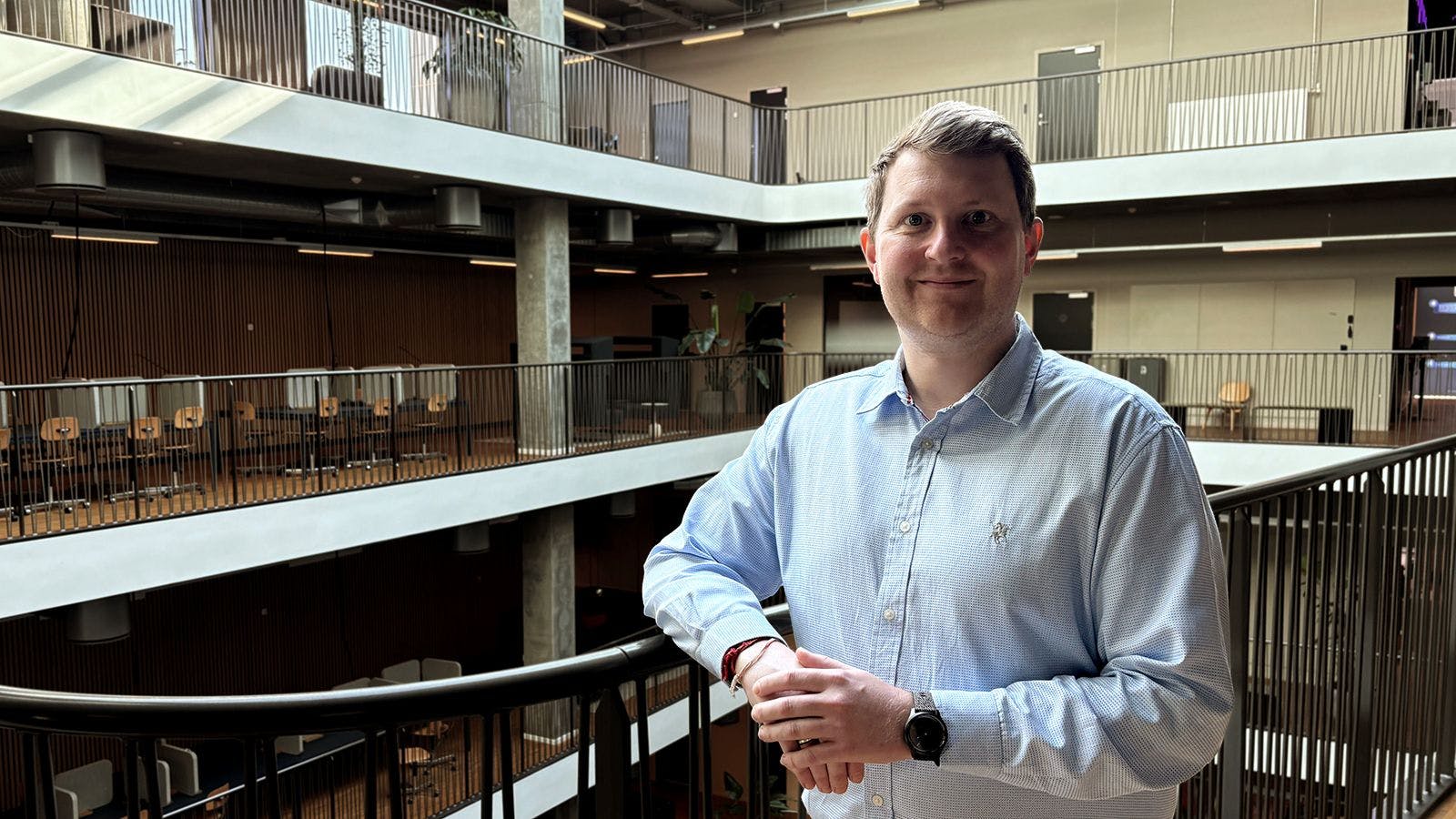
Michael Sants is the Director of Technology Products & Data Platforms at Visma. Originally from the Netherlands and now based in Oslo, he has a background in Marketing Analytics & Data Science. He joined Visma in 2021 as a trainee and now leads the 65-person department responsible for the group’s shared data platforms, integrations, and core business systems.
The Department of Technology Products & Data Platforms supports the 180 Visma companies by building scalable solutions for data integration, AI enablement, and financial reporting. Their mission is to solve complex infrastructure challenges centrally, ensuring that individual companies can focus on growth and customers rather than building their own data infrastructure.

About the episode
Voice of Visma
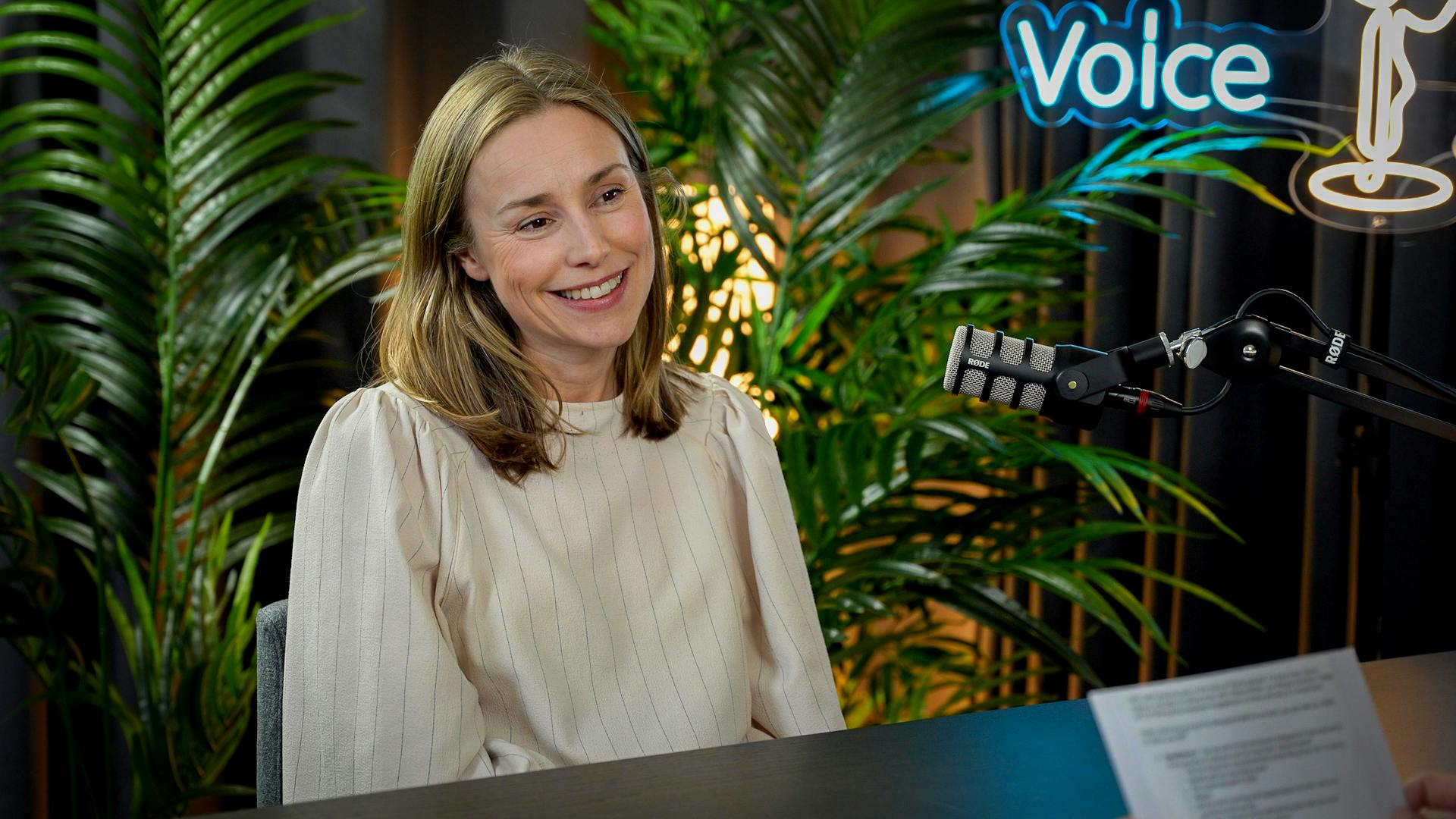
Welcome to the Voice of Visma podcast, where we sit down with the business builders, entrepreneurs, and innovators across Visma, sharing their perspectives on how they scale companies, reshape industries, and create real customer value across markets.

Diana Kigyossy

Benedikte Lyngbø

Holli Hatherly

Berit Braut

Mandy Burger

Victoria Bondarchuk

Jet Bouwman

Brian Ye

Lilja Helgadottir

Carina Ramsøy

Kejsi Gjordeni

Martin Olstad

Claus Dahl

Vlad Boldura

Kaja Falck-Ytter

Linn Kjærland

Ida Nicoline Glosimot

Stina Wahlsten

Pieter Bijl

Emily Northway

Rie Jørgensen

Henriette Veiby

Magnus August Lien

Philip Scarampi

Ari-Pekka Salovaara

Helle Hobbelhagen

Alexander Lystad

Ida Strande Markman

Amanda Lundius Mörck

Isabel Arkvik

Gina Ross Eriksen (former employee)

Juliette Prado (former employee)

Anne-Grethe Thomle Karlsen (former employee)
Related content