Insights
Insights
Article
Stop asking what AI can do. Start asking where you're still stuck.
AI & Innovation
11/5/2026
Article
Stop asking what AI can do. Start asking where you're still stuck.
AI & Innovation
May 11, 2026
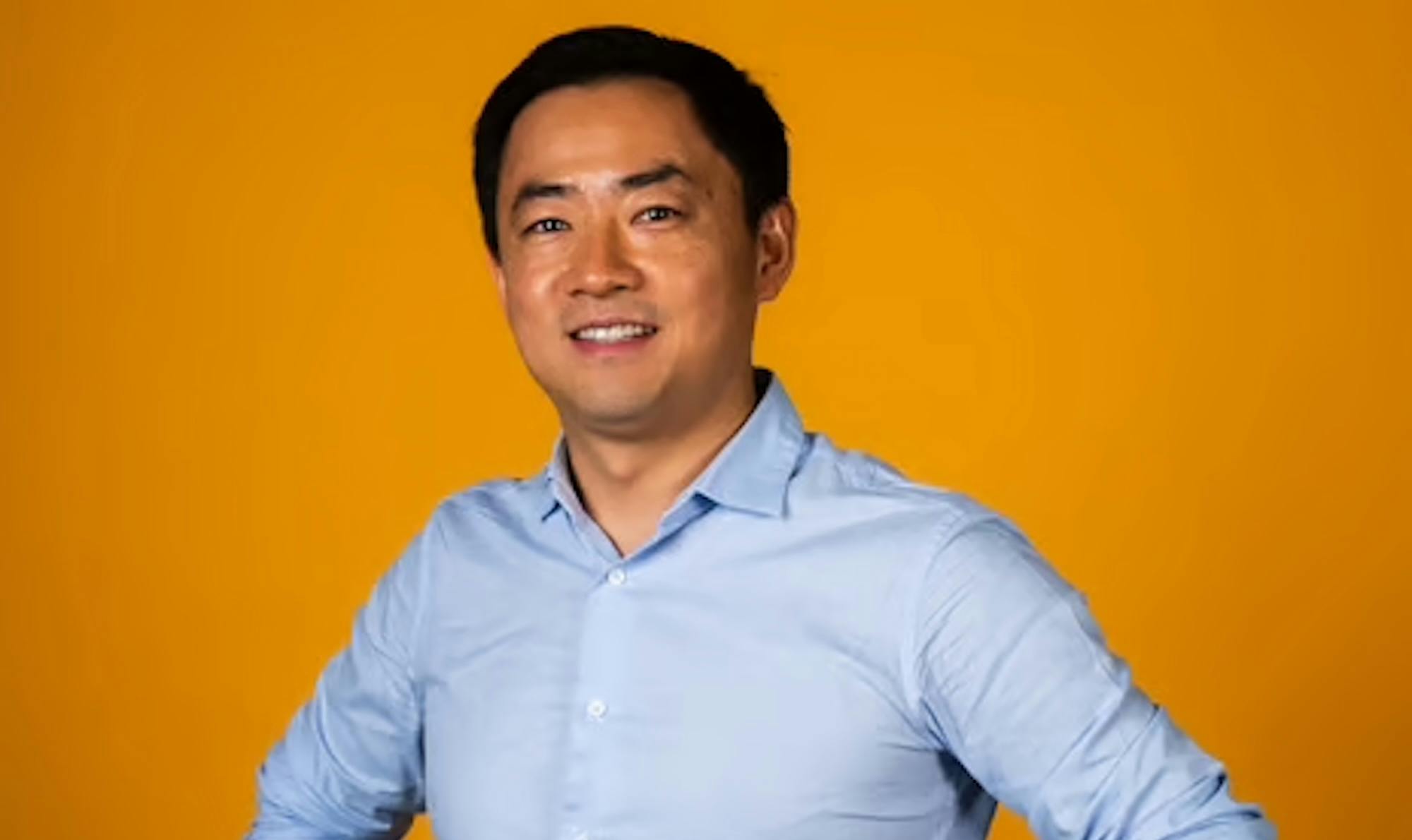
Wilson Guo didn't come to AI through a transformation programme. He came through RevOps, through years of watching companies make decisions too slowly, miss signals in their data, and spend too much time turning messy information into structured insight.
Article
Stop asking what AI can do. Start asking where you're still stuck.
AI & Innovation
11/5/2026
Article
Stop asking what AI can do. Start asking where you're still stuck.
AI & Innovation
11/5/2026
Wilson Guo didn't come to AI through a transformation programme. He came through RevOps, through years of watching companies make decisions too slowly, miss signals in their data, and spend too much time turning messy information into structured insight.
Article
Stop asking what AI can do. Start asking where you're still stuck.
Wilson Guo didn't come to AI through a transformation programme. He came through RevOps, through years of watching companies make decisions too slowly, miss signals in their data, and spend too much time turning messy information into structured insight.
AI & Innovation
May 11, 2026
Wilson Guo didn't come to AI through a transformation programme. He came through RevOps, through years of watching companies make decisions too slowly, miss signals in their data, and spend too much time turning messy information into structured insight.
AI did not feel like a standalone revolution to him. It felt like the next logical step in a long line of attempts to help teams think more clearly and move faster.
That practical perspective runs through everything Wilson does as VP RevOps, Data & AI at Teamleader, part of the Visma ecosystem. He sits at the heart of a network of over 180 software businesses, which gives his view on AI a breadth most operators don't have. It also makes him unusually good at cutting through the noise.
"What can AI do?" is the wrong question
Most AI conversations start with the tool: which model, which platform, which use case is trending. Wilson thinks that's exactly backwards.
"Where is our company still operating too manually, too slowly, or with too little insight?"
That's the question he puts to founders. Not because it sounds more strategic, but because it forces you to look at the actual business where decisions are delayed, where recurring customer signals keep appearing, where teams spend their time on admin instead of judgment.
"Once you ask that question, AI becomes much more practical. You're no longer chasing possibilities. You're solving bottlenecks."
The real win: turning chaos into a first draft
Wilson's most honest answer about where AI saves him time isn't about automation. It's about synthesis.
In RevOps and Data, the raw material is always messy: meeting notes, call transcripts, customer feedback, Slack threads, CRM data, workshop outputs. The hard part isn't the analysis itself. It's turning that scattered information into something concrete enough to act on.
"AI gets me from a blank page to a structured first version. But I still decide what matters."
He's deliberate about that distinction. The value isn't in replacing judgment. It's in removing the friction before judgment even begins.
Usage is not ROI
One of Wilson's sharper frameworks is how he measures AI results. Most companies fall back on adoption metrics: prompts sent, tools activated, people onboarded. That tells you something. But it isn't ROI.
His test is simpler. Did this tool improve a decision, a workflow, or a customer outcome? If the answer is only "people used it more," you're measuring activity. If the answer is "we detected churn signals faster" or "our CRM data quality improved", that's getting closer to ROI.
The most common mistake: starting with the tool
Asked about the biggest mistake he sees, Wilson doesn't hesitate. Companies announce an AI strategy before they understand their actual problems. "It's very tempting to say 'we need an AI strategy' or 'we need to roll out this AI tool.' But that can quickly become disconnected from the real work."
His approach: pick one painful workflow and map it properly. Not a company-wide transformation. One specific process that's repetitive, time-consuming, and close to business value. Understand the inputs, the outputs, the friction, and what "better" would look like. Only then ask whether AI is the right solution.
Sometimes it is. Sometimes the real problem is data quality, process design, or ownership, and AI on top of that would only make things worse.
"If your CRM data is messy and your definitions are inconsistent, AI doesn't fix that. It may even make it worse."
The skill AI makes more important, not less
Wilson's answer on which human skill matters most is one word: judgment. The ability to decide what matters, what trade-offs are acceptable, what timing is right. AI can generate options and summarise information, it can't tell you what to do with any of it.
But the skill that has specifically grown in value at Teamleader is something slightly different: problem framing.
"AI can help with execution. But humans still need to frame the problem. Without that, you get more output, but not necessarily better outcomes."
The quality of AI output depends heavily on the quality of the question, the context, and the constraints you provide. That makes the ability to define a problem precisely what are we actually solving, what does good look like, what decision will this support increasingly critical.
Learning at network speed
As part of Visma, Teamleader has access to a broader ecosystem of companies experimenting with AI across product, operations, finance, customer support, and sales. Wilson is honest about what that means in practice.
"We can see what others are trying, compare notes, and take inspiration from real examples. Visma helps us take smarter risks because the learning curve is shared."
It isn't about copying solutions. Every company has its own market, product, and maturity level. The value is in being able to ask better questions and avoid obvious mistakes because someone else in the network has already made them.
AI adoption is a behaviour problem, not a technology problem
A year ago, Wilson believed AI adoption would be tool-led. Give people access to good tools, provide training, and adoption follows naturally. He no longer believes that.
"Now I think AI adoption is much more workflow-led and behaviour-led. People need to see how AI fits into their actual work. They need examples that are close to their context."
The technology, he says, is impressive. The adoption challenge is still very human.

About the episode
Tags
Share

/podcast-series/voice-of-visma






t.jpg)