Article
The AI Talk: e-conomic CPO Christian Wook Andersen
Article
The AI Talk: e-conomic CPO Christian Wook Andersen
Business insights, Innovation and development, AI
May 4, 2026

The AI Talk: e-conomic CPO Christian Wook Andersen
Business insights, Innovation and development, AI
May 4, 2026
Article
The AI Talk: e-conomic CPO Christian Wook Andersen
Business insights, Innovation and development, AI
May 4, 2026
Article
The AI Talk: e-conomic CPO Christian Wook Andersen
Business insights, Innovation and development, AI
May 4, 2026
4/5/2026
Business insights, Innovation and development, AI
Hi Christian. First, tell us a little bit about yourself and e-conomic.
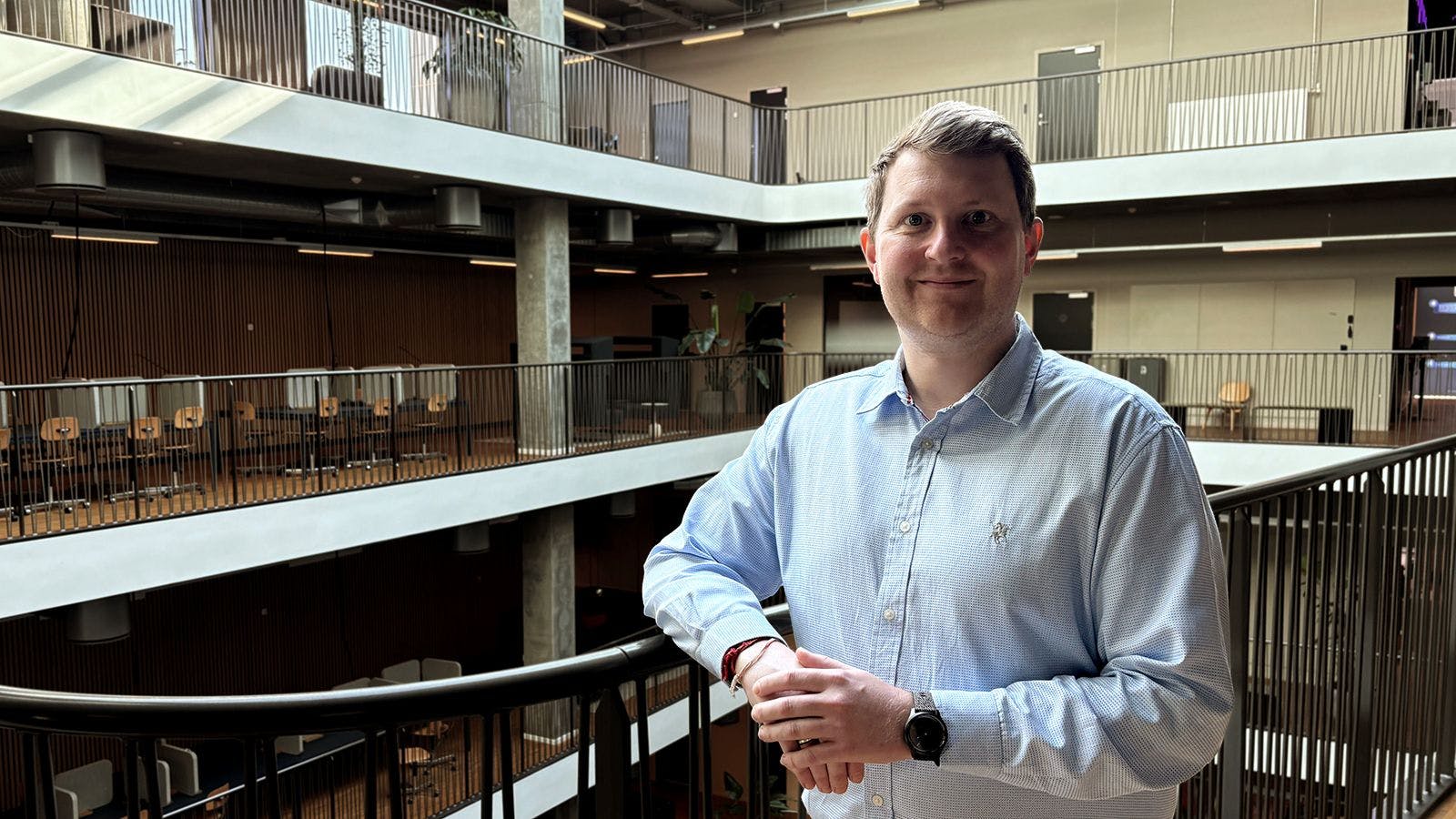
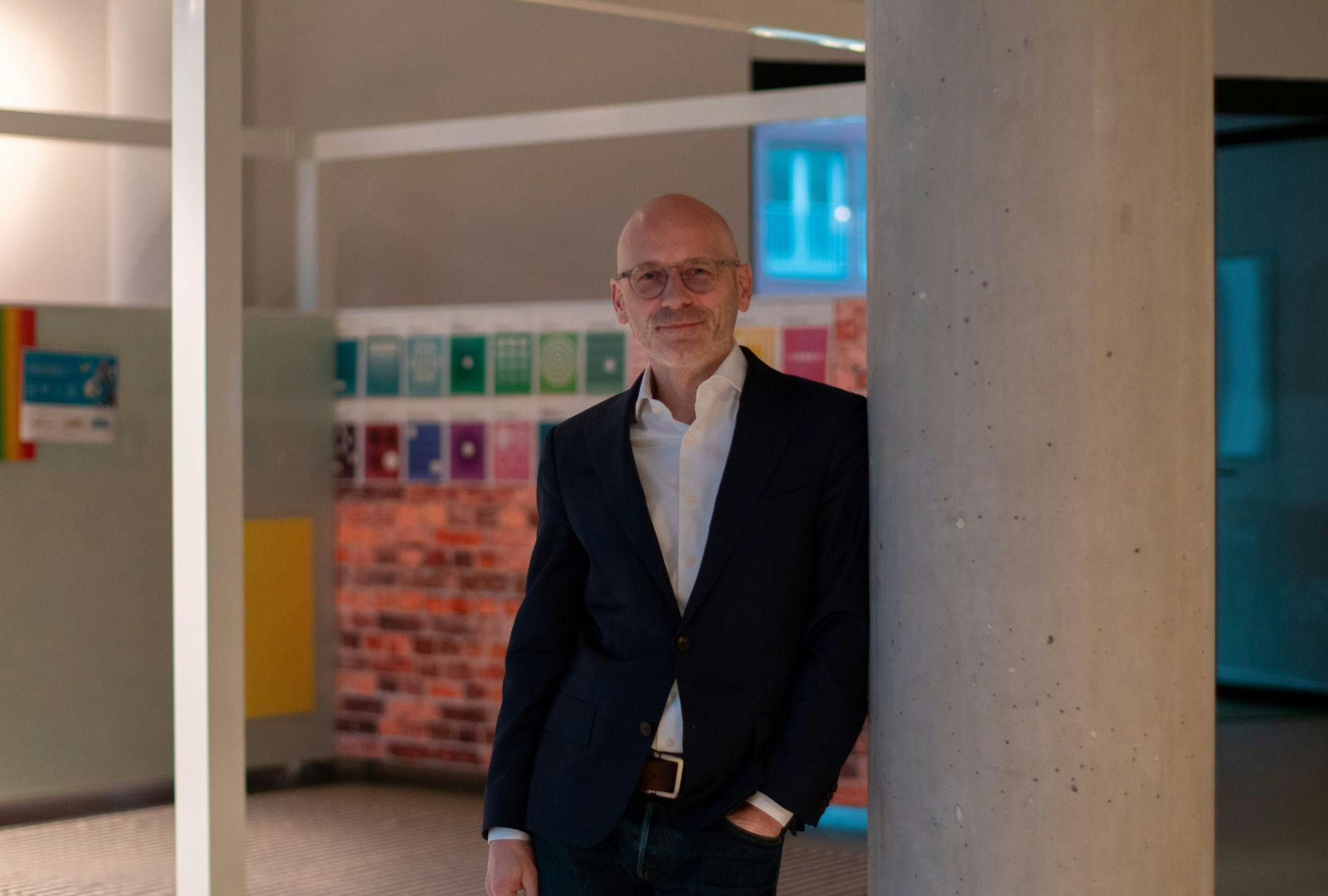
I’m Christian Wook Andersen, Chief Product Officer (CPO) at e-conomic. We are Denmark’s leading accounting platform, currently helping more than 280,000 entrepreneurs, SMBs, accountants, and bookkeepers manage their finances. My role is to drive the product vision and ensure we constantly simplify business operations through smart, digital solutions.
What is the one specific task where AI saves you the most time right now?
Professionally, it's about ending what I call 'double work.' For years, payroll and accounting have lived in separate silos, forcing people to move data manually between systems. That’s not just a waste of time; it’s a risk to data integrity. AI is finally bridging those gaps. Personally, it helps me cut through the noise. As I often say, the ambition to automate has been there for a long time – what’s new is the tempo.
Can you share one concrete example where e-conomic used AI to add real value for the customer?
We actually have several layers of AI value. First, we recently rolled out 'EVA', our AI assistant that helps users with daily queries about their accounts. It’s not just about moving data; it’s about making data intelligent and actionable. Parallel to that, we are launching 'financial insights', where AI analyses accounting data to better equip accountants to advise management.
But value also lies in removing what I call 'the mechanical tasks.' A great example is our Company Card. Traditionally, expense management is a soul-crushing administrative task. Now, the moment a transaction happens, the system asks for a photo of the receipt while it’s still in your hand, categorising it instantly. We are moving from a reality where you manually push numbers, to one where the focus is on oversight and better decision-making."
How do you measure if an AI tool is actually providing ROI?
It comes down to trust and efficiency. We measure success by how much "mental bandwidth" we can free up for the user and whether they feel secure in the automation. When we see tasks like monthly reporting and customer emails being handled by our upcoming "autonomous agents", we know we are delivering direct value to our customers' bottom line.
How do you distinguish between AI hype and tools that bring value to your company?
We have a very pragmatic approach: the driver must always have their "hands on the wheel". We aren’t interested in chasing the hype at 180 km/h without control. For us, a tool provides value if it supports our core principles of 100% credibility and transparency. If AI can simplify a task without compromising the accuracy of the accounts, that is true value.
As technology gets smarter, which human skill matters most?
Judgment and empathy. We are witnessing a technological paradigm shift that moves focus from the mechanical to the human. AI will handle the repetitive registrations, but it won’t replace the need for skilled financial professionals. On the contrary, it liberates their time to do what they’ve always had the potential for: providing the insights and advice that help businesses make better decisions.
What is the biggest mistake companies make when rushing into AI?
Forgetting that credibility is more important than speed. In a world of accounting and legislation, it is vital that users can trust the product. You shouldn’t let AI drive the car before you are certain it knows the rules of the road.
Will AI agents replace traditional software?
I see it as an evolution of the 'cockpit.' We are moving away from software where you manually push numbers from one system to another. Instead, software becomes a platform where you manage autonomous agents. But remember, the accounting industry is built on responsibility and diversity. Habits don't change overnight. Even as agents take over the heavy lifting, we need the software interface to ensure transparency and keep the 'human in the loop'.
How has the ‘collective brain’ of Visma influenced how you approach AI?
Being part of the Visma ecosystem allows us to move from isolated experiments to scalable solutions. The "collective brain" means we can share learnings across borders whether it's best practices for LLMs or security frameworks. For e-conomic, this influence has reinforced our belief that AI shouldn't just be a flashy feature, but a reliable foundation. It allows us to build with the confidence of a large-scale tech leader while staying focused on the specific needs of the Danish market.
Read: Scaling e-conomic into a leading accounting platform in Denmark

About the episode
Voice of Visma
Welcome to the Voice of Visma podcast, where we sit down with the business builders, entrepreneurs, and innovators across Visma, sharing their perspectives on how they scale companies, reshape industries, and create real customer value across markets.

Diana Kigyossy

Benedikte Lyngbø

Holli Hatherly

Berit Braut

Mandy Burger

Victoria Bondarchuk

Jet Bouwman

Brian Ye

Lilja Helgadottir

Carina Ramsøy

Kejsi Gjordeni

Martin Olstad

Claus Dahl

Vlad Boldura

Kaja Falck-Ytter

Linn Kjærland

Ida Nicoline Glosimot

Stina Wahlsten

Pieter Bijl

Emily Northway

Rie Jørgensen

Henriette Veiby

Magnus August Lien

Philip Scarampi

Ari-Pekka Salovaara

Helle Hobbelhagen

Alexander Lystad

Ida Strande Markman

Amanda Lundius Mörck

Isabel Arkvik

Gina Ross Eriksen (former employee)

Juliette Prado (former employee)

Anne-Grethe Thomle Karlsen (former employee)
Related content