Insights
Insights
Article
The AI Talk: Talana CEO Ignacio Spiniak
AI & Innovation
Apr 6, 2026
Article
The AI Talk: Talana CEO Ignacio Spiniak
AI & Innovation
April 6, 2026
Many companies fall for the AI hype by building tools that look great in a demo but don’t work in real life. For Ignacio Spiniak, CEO of Talana, the goal is to make the product feel smarter. By focusing on solving real problems first, Talana is optimising internal processes and turning complex HR tasks into simple, automated workflows that feel more natural to the user.

Article
The AI Talk: Talana CEO Ignacio Spiniak
AI & Innovation
6/4/2026
Article
The AI Talk: Talana CEO Ignacio Spiniak
AI & Innovation
6/4/2026
Many companies fall for the AI hype by building tools that look great in a demo but don’t work in real life. For Ignacio Spiniak, CEO of Talana, the goal is to make the product feel smarter. By focusing on solving real problems first, Talana is optimising internal processes and turning complex HR tasks into simple, automated workflows that feel more natural to the user.
Article
The AI Talk: Talana CEO Ignacio Spiniak
Many companies fall for the AI hype by building tools that look great in a demo but don’t work in real life. For Ignacio Spiniak, CEO of Talana, the goal is to make the product feel smarter. By focusing on solving real problems first, Talana is optimising internal processes and turning complex HR tasks into simple, automated workflows that feel more natural to the user.
AI & Innovation
April 6, 2026
Many companies fall for the AI hype by building tools that look great in a demo but don’t work in real life. For Ignacio Spiniak, CEO of Talana, the goal is to make the product feel smarter. By focusing on solving real problems first, Talana is optimising internal processes and turning complex HR tasks into simple, automated workflows that feel more natural to the user.
Hey, Ignacio. Tell us a little bit about yourself and your company, Talana.
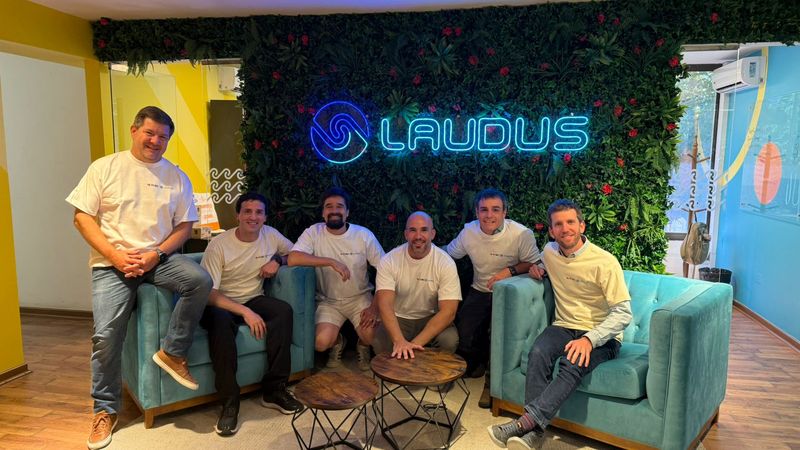
I’m an electrical engineer and Stanford MBA who spent a decade in finance and private equity. At some point, I realised I didn’t just want to sit on the sidelines advising companies, I wanted to run a company from the trenches along with a team. In 2023, I joined Talana as CEO, and becoming part of Visma in 2025 has been an incredible place to keep building from. Outside of work, I’m a father of three and a fan of sports and BBQs.
Talana is an all-in-one HR platform that helps companies run everything from payroll to employee experience, serving around 2,500 customers and over half a million users in Chile and Peru.
What is the one specific task where AI has been really helpful to you?
I’m obsessed with customer feedback, and AI has helped me integrate different sources of information to have real-time and valuable insights, allowing for fast and robust decision-making. On a personal level, my cooking skills have improved significantly and our small kitchen garden is more productive than ever!
Can you share a concrete example where Talana used AI to add value?
One example is how we use AI in our product to help companies interpret and act on employee feedback. The hard part of running climate surveys is not collecting the answers, it’s actually understanding them. When you have thousands of open-text comments, it becomes very difficult for leaders to process everything.
Our AI solution helps summarise themes, detect patterns and highlight relevant issues, allowing HR teams and leaders to move much faster from collecting feedback to actually taking action.
How do you measure if an AI tool is actually providing ROI?
For us, it’s not that different from any other product feature. Does it save time? Does it reduce support tickets? Does it make the user experience better? Does it allow us to sell more? If it improves those metrics, then it is creating value.
How do you distinguish between AI hype and tools that bring value to the product?
A lot of AI demos look impressive but don’t actually fit into real workflows. The tools that create real value are usually the ones embedded into the product people already use. When AI is integrated into the flow of work, adoption happens more naturally. One way I think about this: the best AI is the one users don’t notice, they just feel the product became smarter.
As technology gets smarter, what human skill matters most?
Judgment. It has always been key, but in a context in which access to information is increasingly easier, it becomes even more crucial. AI can generate ideas and help you move faster, but someone still needs to decide what matters and what direction to take. AI can accelerate thinking, but it can’t replace judgment.
What is the biggest mistake you see companies making with AI?
Starting from the technology instead of starting from the problem. It is easy to fall into the trap of asking ourselves “where can we use AI?”, when the better question is “what problem are we trying to solve?” If we focus on the real problem first, AI can sometimes be the right solution. If we start with the technology, it’s easy to build things that look impressive but don’t really matter.
How has the collective intelligence of Visma influenced your approach?
Surfing the AI wave within Visma has been much easier than doing it alone. We benefit from the collective experience across the group, seeing what has worked and what hasn’t in other markets. Being based in Chile but having direct access to someone who has already successfully implemented a solution in Stockholm, Barcelona, or Sao Paulo is incredibly valuable.
If a founder asked where to start with AI tomorrow, what is the first step?
Look for where people inside the company are wasting time with repetitive tasks or manual processes. Those are usually the best places to start. You don’t need a big AI strategy on day one. Start with a few quick wins, empower internal AI ambassadors, and let the magic happen.
Will AI agents replace traditional software?
AI will definitely change how we interact with software, but I don’t think it will replace software platforms. For example, our payroll software has been built over 10 years. It includes deep integrations with regulators, multiple security certifications and customer relationships built over hundreds of human interactions. All of that creates trust, and that kind of trust won’t be replaced by a weekend project built in Claude.
That said, the speed of disruption has clearly increased. It’s our responsibility to think several steps ahead and make sure we are part of the disruptors, not the disrupted.

About the episode
Tags
Share

/podcast-series/voice-of-visma


t.jpg)