Article
Your company is your culture: The Rui Alves Founder Story
Article
Your company is your culture: The Rui Alves Founder Story
Business insights
April 16, 2026
Your company is your culture: The Rui Alves Founder Story
Business insights
April 16, 2026
Article
Your company is your culture: The Rui Alves Founder Story
Business insights
April 16, 2026
Article
Your company is your culture: The Rui Alves Founder Story
Business insights
April 16, 2026
16/4/2026
Business insights
The first SaaS company in Portugal
"I asked myself: why am I doing this? Why am I going abroad and leaving my country? And the only answer I had was money," Rui recalls. "That didn’t feel right. I didn’t want to change my whole life just because I wanted more money."
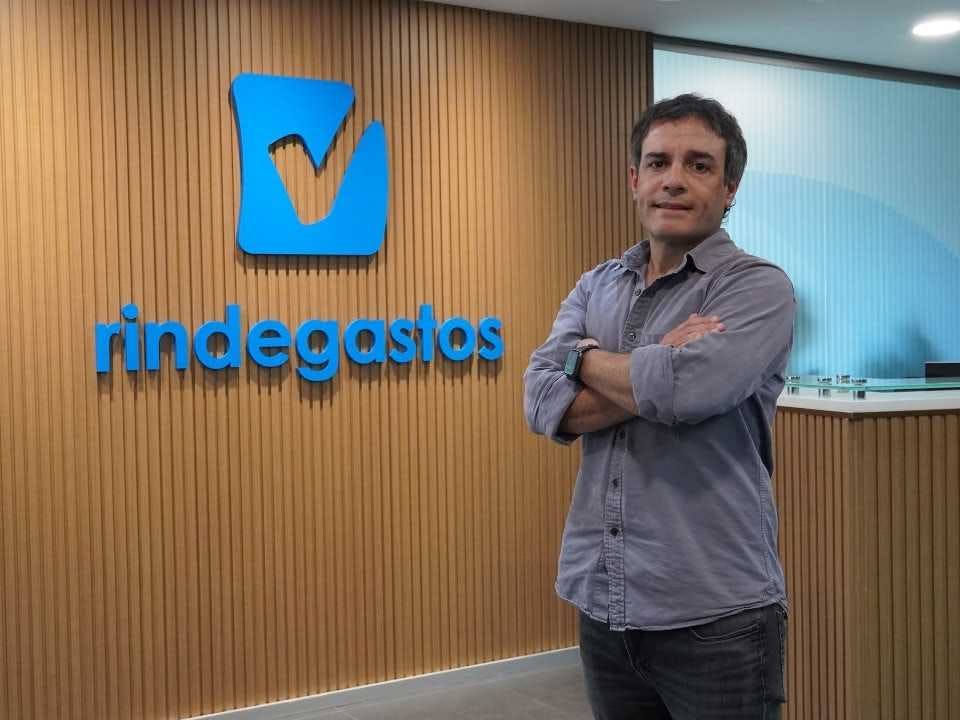
Instead of boarding the flight, Rui stayed in Lisbon to build his own business. That decision led to the creation of InvoiceXpress, a company born out of a personal struggle: the difficulty of simply sending an invoice.
As the first Software as a Service (SaaS) company in Portugal, it moved billing from clunky, on-premise Windows systems to the cloud. Today, it serves thousands of entrepreneurs, allowing them to automate their billing processes so they can focus on what actually matters.
The human behind the tech
It was important for Rui to not only understand software, but also understand the people behind it. Since the age of 19, he has invested a considerable amount of money, time and energy in personal development, studying under masters such as Tony Robbins and Keith Cunningham.
He used his companies as a real-world laboratory for these lessons.
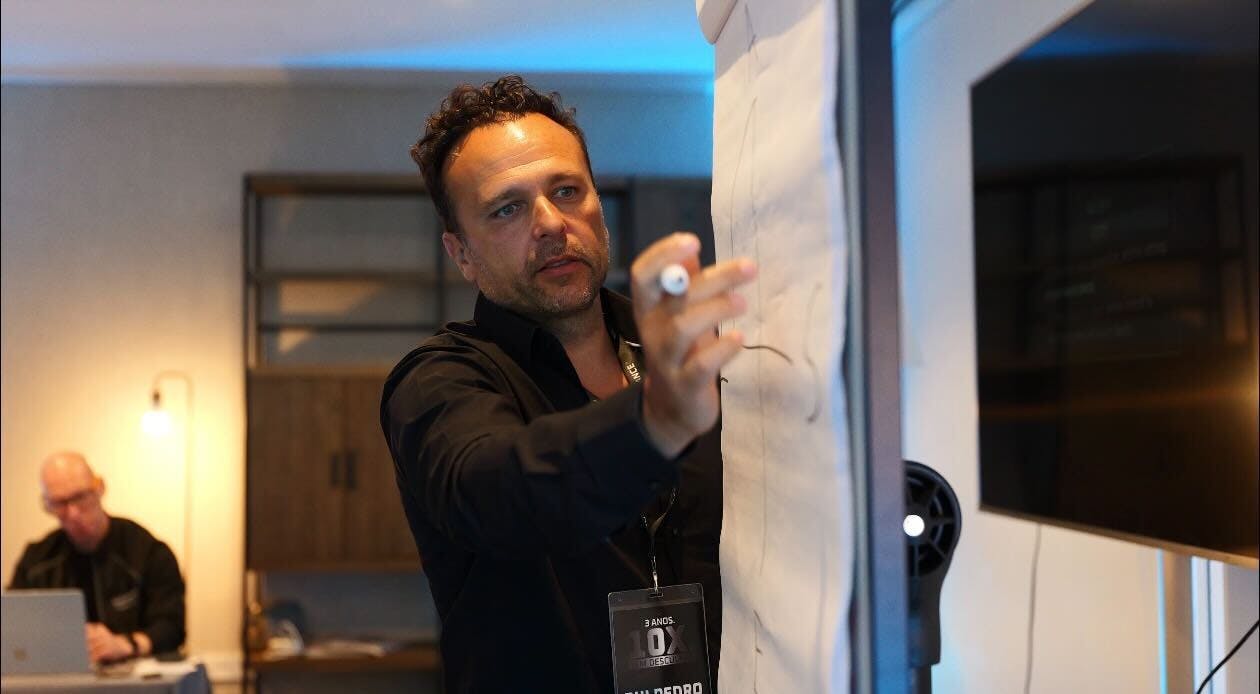
"I applied a lot of the concepts in the business," Rui says. "I used my company to create a framework to inspire employees and build a culture of excellence, growth and joy in the workspace."
Culture isn’t a mission statement
For Rui, culture is one of the most misunderstood terms in business. He argues that it has nothing to do with the ping-pong table or the mission statement on the wall.
"Every company has a culture because every company with more than one person has behavior behind it," Rui explains. "Culture is how you treat someone when they misbehave. It’s how you celebrate victories. It’s how you communicate through decisions like firing someone."
The gratitude experiment
In 2014, Rui noticed his team complaining about the chairs in a brand-new office. He realised the complaints weren't about the furniture, they were about a lack of connection.
He launched an experiment: every day, one employee was responsible for cleaning the kitchen, and every other team member had to show their appreciation, by either writing the person or telling them.
"In the first few days, no one said thank you. Then I started sending long, detailed emails showing appreciation for that person’s character," Rui says.
People noticed. After a few days, they started sending emails themselves, taking inspiration from Rui and showing appreciation to each other. After 30 days, Rui ended the experiment and hired a cleaning lady, but the appreciation emails and messages continue to this day.
A bigger platform for building
In 2024, InvoiceXpress joined the Visma family, a move Rui sees as a natural evolution of his journey. For him, the transition was an opportunity to scale his "laboratory” with better tools.
"Joining Visma has been an exciting new chapter and an incredible platform to keep building from," Rui says. “It allows me to stay focused on the work while tapping into a wider pool of resources and collective expertise to further improve the product.”
How to produce extraordinary results
Today, as part of the Visma family, Rui continues to advocate for this human-centric model. For him, the exit was the validation of an experiment that started with a choice to stay home.
While many founders focus solely on the product, Rui believes the secret sauce of a successful business sits much further upstream.
"Customers buy products and brands, but behind those is the way you relate to customers and how you innovate," Rui says. "At the center of it all is people and culture. Great people and a great culture usually produce extraordinary results."

About the episode
Voice of Visma
Welcome to the Voice of Visma podcast, where we sit down with the business builders, entrepreneurs, and innovators across Visma, sharing their perspectives on how they scale companies, reshape industries, and create real customer value across markets.

Diana Kigyossy

Benedikte Lyngbø

Holli Hatherly

Berit Braut

Mandy Burger

Victoria Bondarchuk

Jet Bouwman

Brian Ye

Lilja Helgadottir

Carina Ramsøy

Kejsi Gjordeni

Martin Olstad

Claus Dahl

Vlad Boldura

Kaja Falck-Ytter

Linn Kjærland

Ida Nicoline Glosimot

Stina Wahlsten

Pieter Bijl

Emily Northway

Rie Jørgensen

Henriette Veiby

Magnus August Lien

Philip Scarampi

Ari-Pekka Salovaara

Helle Hobbelhagen

Alexander Lystad

Ida Strande Markman

Amanda Lundius Mörck

Isabel Arkvik

Gina Ross Eriksen (former employee)

Juliette Prado (former employee)

Anne-Grethe Thomle Karlsen (former employee)
Related content